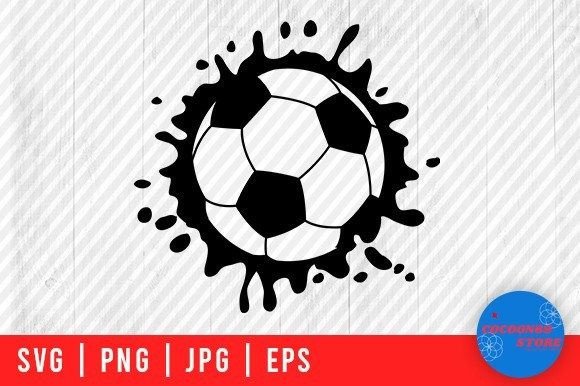
Soccer Splatter SVG: A Design You Can Actually Use
Every time I see a new embroidery file, my first question isn’t if it’s cute. It’s whether it will work. Not just on the screen, but in the hoop, under the needle, and finally, on the finished product. Today, I’m looking at Soccer Splash, Soccer Splatter SVG, and I’m thinking through exactly where it belongs in a real project lineup.
The First Impression: Energy You Can Stitch
This design hits you with a playful, energetic mood. The “splash” or “spatter” concept suggests movement and fun—it’s not a static, formal logo. This is key. For embroidery, that means it’s perfect for projects where personality is the selling point. Think kids’ items, spirited gifts, or casual custom apparel. The layout feels bold and graphic, which translates well to stitch; there’s a clear focal point without overly fussy detail. It’s a design that promises to be readable from a distance, which is gold for things like tote bags at a craft fair or embroidered patches on a cap.
Where This Design Naturally Belongs
My mind immediately goes to a few specific scenarios. I pictured it on a child’s sweatshirt, maybe for a birthday gift. I also visualized it as a standout element on a canvas tote bag for a soccer team mom. The bold, graphic nature makes it a strong candidate for personalized gifts where you want a clean, professional look without it feeling corporate. It’s less suited for delicate, formal items but absolutely shines on casual, everyday custom apparel.
- Youth sports apparel (sweatshirts, t-shirts)
- Embroidered tote bags and backpacks
- Canvas caps or beanies
- Fun kitchen towels or aprons for a soccer-themed kitchen
- Simple nursery decor for a sports-loving family
- As a bold, clean patch
The Real-Life Embroidery Test
Let’s talk application. I’m considering a real project: a custom embroidered tote bag for a small shop’s merchandise. How would Soccer Splatter SVG perform?
The high-resolution files mentioned—SVG, PNG, EPS, JPG—are a good starting point. For machine embroidery, you’ll need to convert or have the file digitized appropriately. Once that’s done, the design’s graphic strength is an advantage. Large, open areas mean reasonable stitch density, which is healthier for thicker fabrics like canvas or sweatshirt fleece. You’re less likely to get a stiff, puckered result if the stitch count is managed well.
Visual appeal on the finished product is high. This design would stitch up with clarity, making the tote bag look intentionally handmade and professional, not amateur. That builds customer trust. For an Etsy seller or craft business, that finished look directly impacts your brand consistency and the product’s perceived value.
Where to Exercise a Little Caution
No design is perfect for every scenario. Because of its likely scale and bold shapes, I’d be careful using it on very small items. Trying to shrink it down for a tiny baby bib might compromise the impact and make the details muddled. Similarly, on highly textured or very stretchy fabrics, those clean lines could lose definition without the right stabilizer and hoop technique.
Dark fabric backgrounds are a consideration, too. The design’s positive, open feel might rely on contrasting thread colors to pop. Always test that contrast. And for curved surfaces like caps, the larger, central elements would need to be positioned carefully to avoid distortion.
Practical Designer Notes Before You Hoop It
Here’s my process, and I recommend it for any new embroidery file like this one.
- Test on Scrap First. Run a stitch-out on the same fabric and weight as your final project. Check for puckering, thread coverage, and how the small details translate.
- Check Color Contrast. Stitch a sample on both light and dark scraps. Does it hold its visual personality on both?
- Review the Scale. Confirm your intended hoop size can accommodate the design at the size you want. Don’t assume.
- Inspect the Details. Look at the converted file closely. Are there any tiny corners or potential satin stitch areas that might be tricky?
- Consider the Product Life. If you’re making a kitchen towel or apparel that needs frequent washing, a simpler, less dense design like this can be more durable.
A crucial step for anyone selling finished items: confirm the licensing. The product description states it can be printed on items, but for commercial embroidery projects, you must verify the terms yourself. Never assume. Does the license allow you to sell the physical handmade product you embroider? Clarify that before listing anything in your small shop.
Turning a Digital File into a Loved Product
The leap from a digital embroidery file to a product someone buys or gifts is all about execution. Soccer Splash, Soccer Splatter SVG has the visual personality to engage a buyer—it’s recognizable, fun, and clean. On a well-made sweatshirt with a professional stitch-out, it elevates a simple garment. On a tote bag, it becomes a statement piece.
This isn’t a design for every project, but for its niche—playful, graphic, sports-themed casual goods—it’s a strong asset. It supports brand consistency if your shop leans into that aesthetic. Its giftability is high for the right recipient. In short, it’s a practical, usable design file. It won’t solve every problem, but for the projects it fits, it will perform beautifully, and that’s exactly what I look for in a craft business design asset.
My final thought: designs like this remind us that good embroidery design isn’t about complexity; it’s about clarity and fit. Know your project, know your customer, and a bold, simple graphic like this one can become one of your most reliable, best-selling finished products.